
What are the main advantages and disadvantages of load bank cooling methods?
Time:2026-03-31
As a key equipment for simulating electrical loads and testing the performance of power supply systems, load banks generate a lot of heat during operation. The cooling method directly determines their operational stability, service life and applicable scenarios. At present, the mainstream cooling methods are mainly divided into air cooling, water cooling and oil cooling. Each method has its own advantages and disadvantages in terms of heat dissipation efficiency, cost and maintenance, which need to be selected according to actual needs.
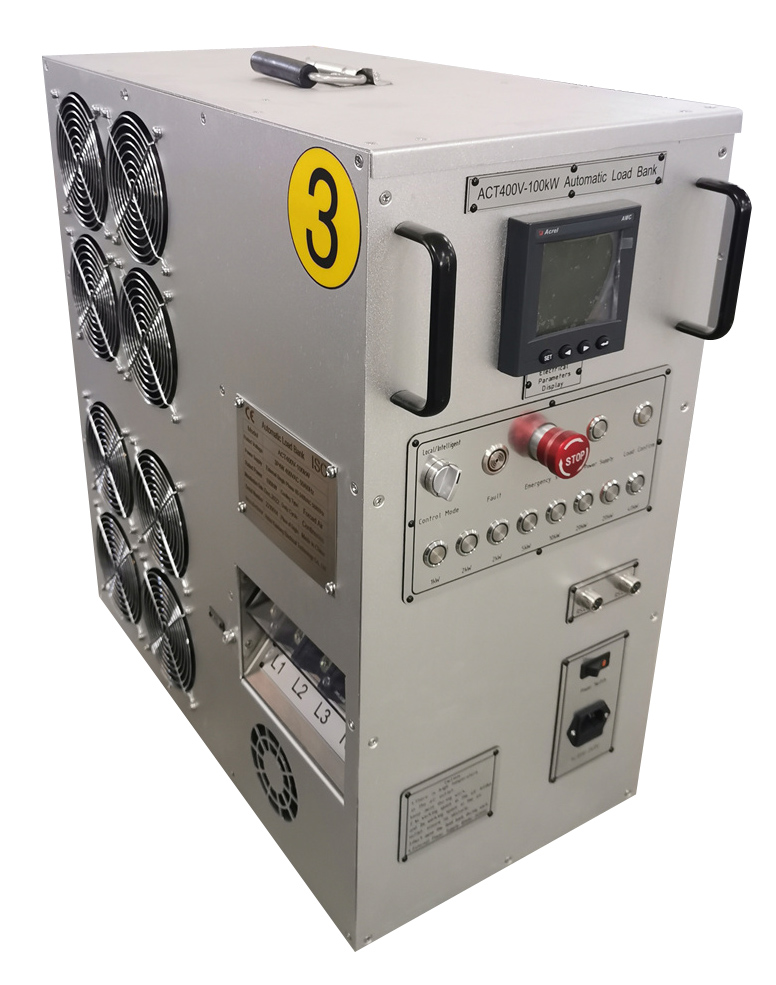
100kW Load Bank
100kW Load Bank
Air cooling is the most commonly used cooling method. It mainly takes away heat by driving air flow through fans. It has a simple structure, low cost, and does not require additional cooling media. Maintenance only needs to clean fans and heat sinks. It is suitable for medium and small power load banks (usually below 500kW) and is widely used in conventional industrial testing scenarios. However, it has obvious disadvantages: the heat dissipation efficiency is greatly affected by the ambient temperature, the heat dissipation capacity of the same volume is much lower than that of liquid cooling, multiple groups of fans are required in high-power scenarios, the noise is relatively high (usually ≥75dB), and the equipment volume is relatively large.
Water cooling uses water or special coolant as the medium, with extremely high heat dissipation efficiency. The heat absorption capacity of water of the same volume is more than 3000 times that of air. It can accurately control the temperature, with low noise (40-55dB) and compact volume. It is suitable for high-power and high-power density scenarios, such as data centers and aerospace fields. Its disadvantages are high initial investment, complex system, risk of coolant leakage, maintenance requiring professional personnel, and anti-freezing needs to be considered in low-temperature environments.
Oil cooling is mostly used in special high-temperature and high-power scenarios. It has good thermal conductivity and insulation, can effectively protect the internal components of the equipment, and operates stably. However, the oil cooling system has high cost and cumbersome maintenance, requires regular replacement of cooling oil, and the oil is easily polluted. The applicable scenarios are relatively limited, not as popular as air cooling and water cooling.
In summary, air cooling is suitable for medium and small power, limited budget and convenient maintenance scenarios; water cooling is suitable for high-end scenarios requiring high power, low noise and high stability; oil cooling is used for special scenarios in harsh environments. Reasonably selecting the cooling method can maximize the performance of the load bank and reduce the operation and maintenance costs.
News Recommendation
-
 2026-08-21
TriumphLoad to Showcase Advanced Load Banks & Dummy Load Solutions at Middle East Energy 2026
-
 2026-05-28
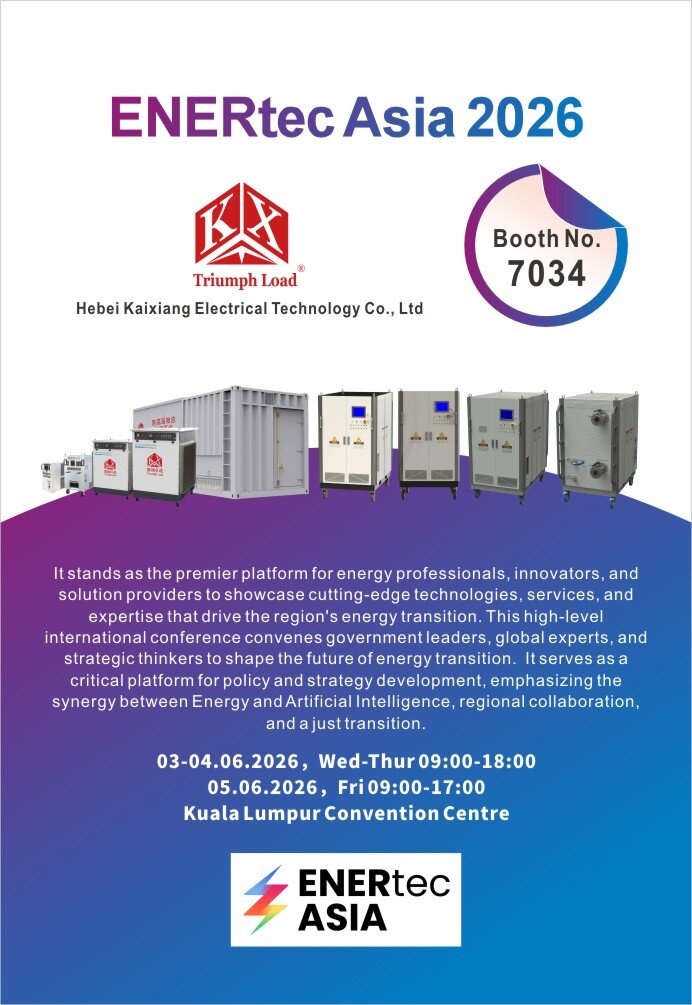
TRIUMPH LOAD EXHIBITING AT ENERTEC ASIA 2026
-
 2024-09-11
TRIUMPH LOAD EXHIBITING AT Enlit Europe 2024 -BOOTH 7.H08
-
 2023-04-21
TRIUMPH LOAD EXHIBITING AT DATA CENTER WORLD GERMANY 2023-BOOTH F909
-
 2023-04-06
TRIUMPH LOAD EXHIBITING AT ELECTRIC POWER TECH KOREA 2023 – Booth G109
